
CLIMATE AND WORK IN THE VINEYARD: The land of the Rioja / February 2021
According to the monthly report of the AEMET, February was very warm overall, with an average temperature in mainland Spain of 9.5ºC; About 2.5ºC above the monthly average for the month with respect to the reference period 1981-2010. In Rioja we even surpassed in 3.0ºC. It has been the third warmest February since the beginning of the records in 1961 falling behind the months of February 2020 and 1990, and therefore the second warmest of the 21st century. The minimum temperatures were particularly high, which were 3.1ºC above the normal average for the month, the highest recorded minimum temperatures in February since the beginning of the record.
Three particularly warm episodes were identified within the month, the first lasted between days 1 and 6, the second from 8 to 21, and the third between 23 and 27.
In terms of rainfall, it has been described as a wet month, with an average rainfall of 71 mm over mainland Spain, a value that reaches 35% above the normal value for the month. It was the 22nd wettest February since the records began in 1961 and the 8th wettest of the 21st century. In the land of Rioja this increase has been proportionally higher when we are further west. Which naturally corresponds to the different basins: more humid in the Atlantic slope, drier in the Mediterranean, being able to estimate the increases with respect to its average value in 153% and 83% respectively.
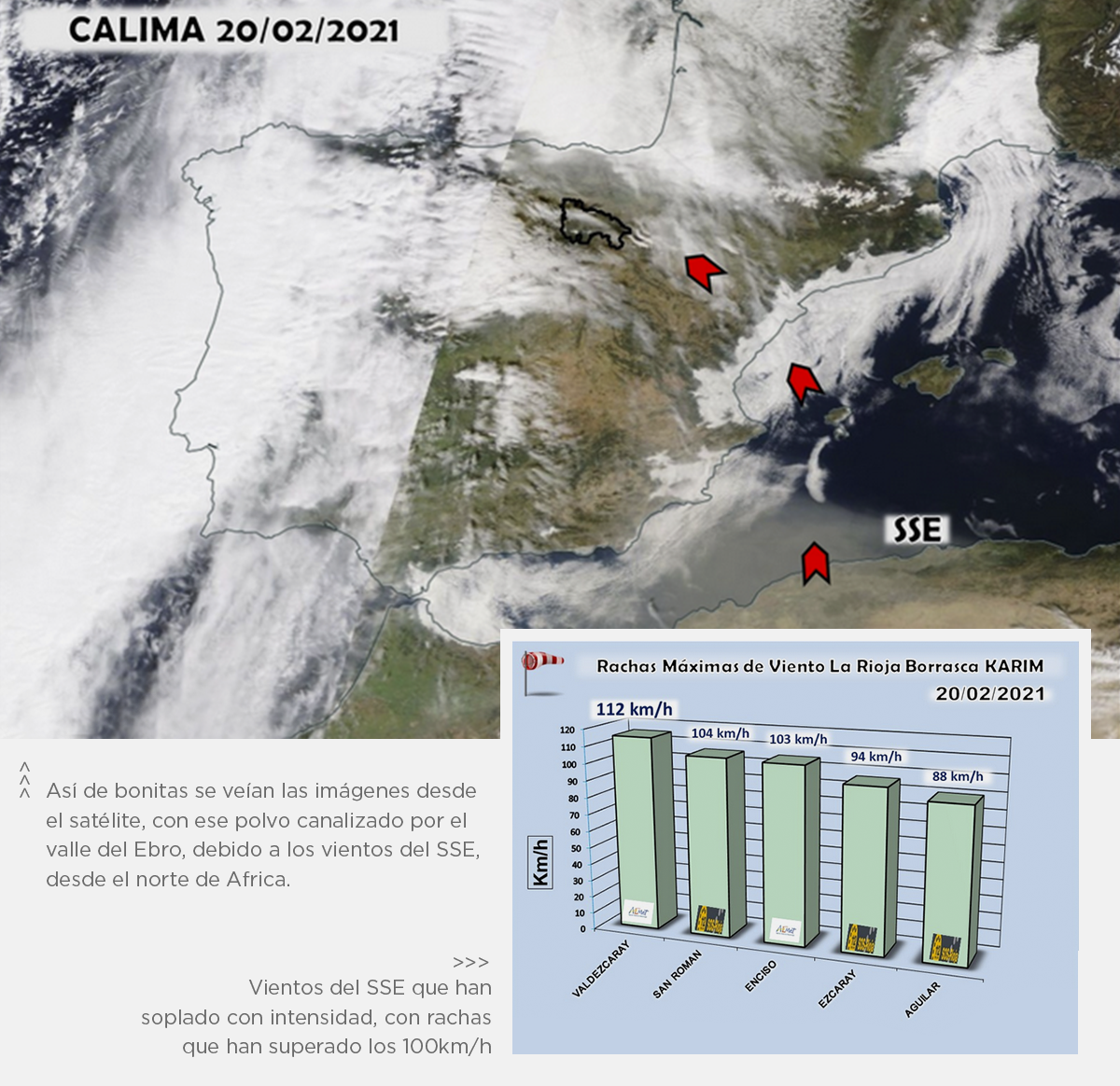
On the other hand, the accumulated insolation throughout the month of February was lower than the normal value by more than 10%, and as for the wind, the Karim squall that gave rise to very strong winds in the northern half of the peninsula deserves to be highlighted. Between days 16 to 21.
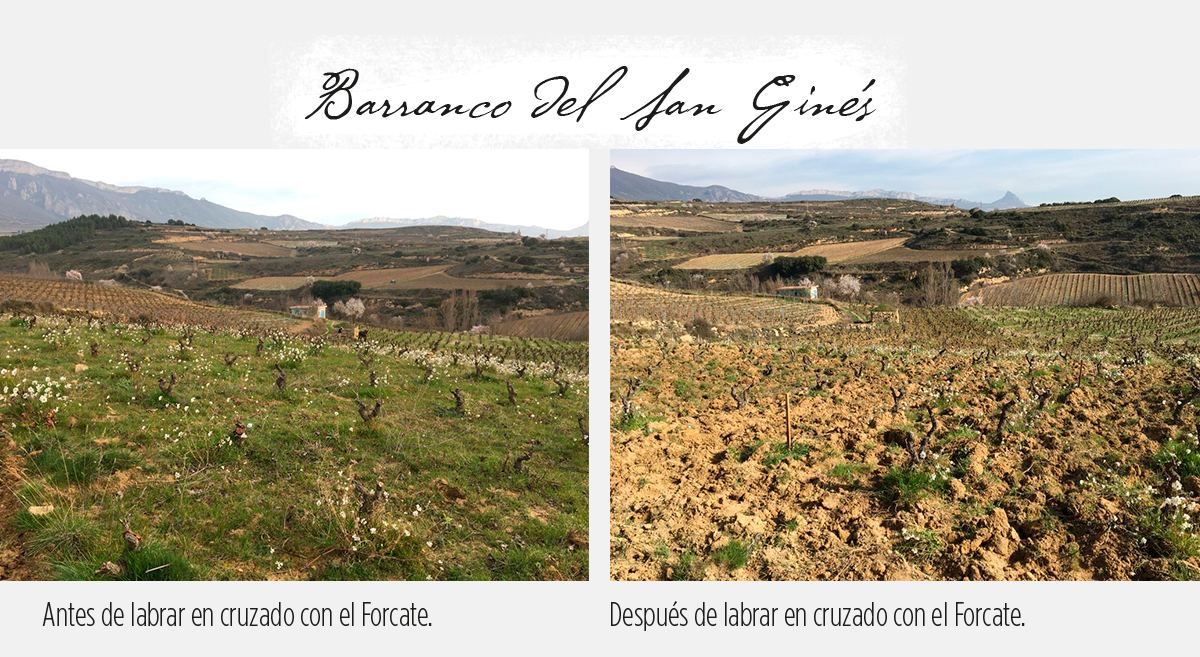
In such circumstances we were able to finish removing the vine shoots from the vineyards in bundles called ¨gavillas¨ and make our first ploughing of the season.
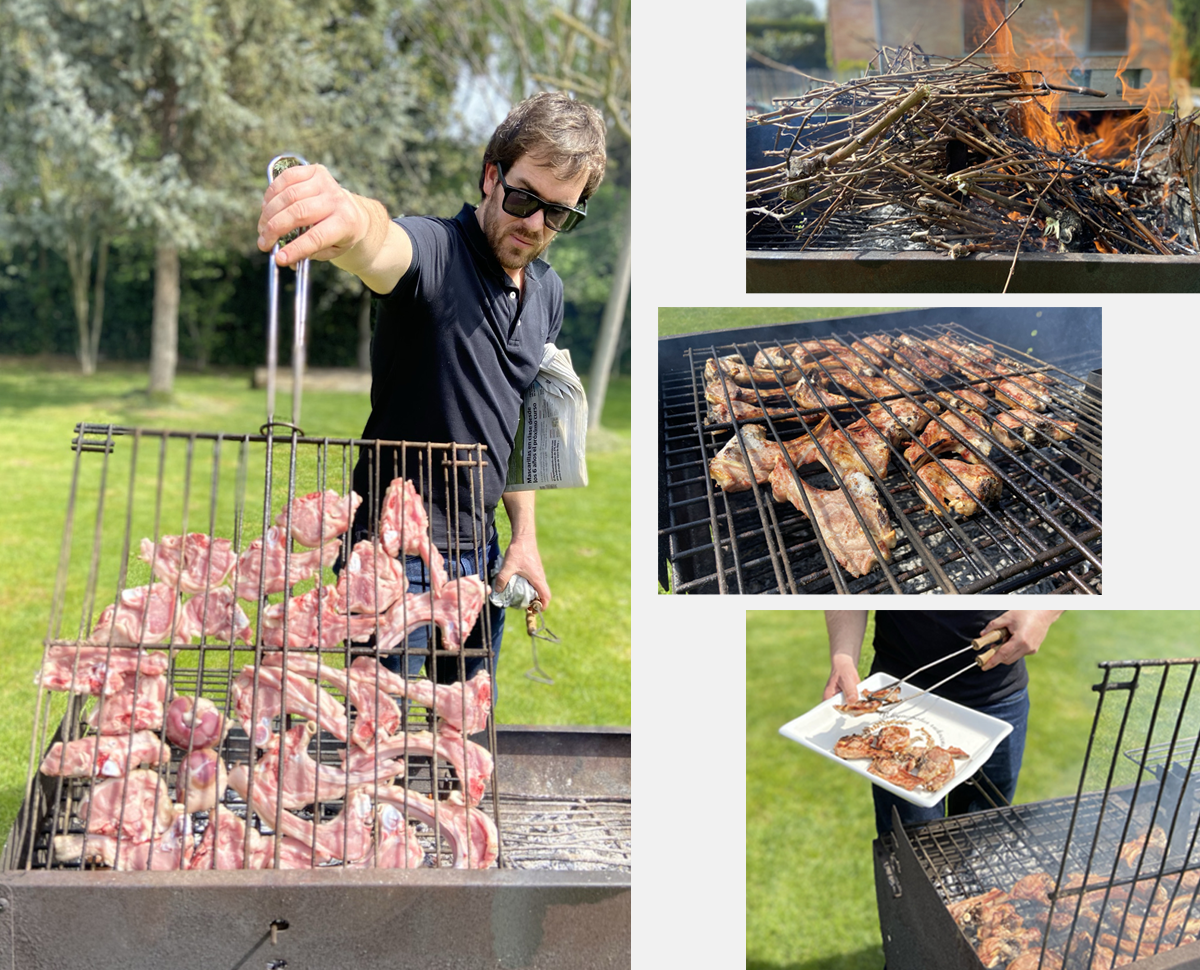
The ¨gavillas¨ will be used to grill lamb chops later in the spring and summer months. It is perhaps the most important gastronomic specialty of the Rioja, and a reason for a family party.
The ploughing of the vineyard at this time has several reasons. It is used to eliminate weeds mechanically, without the use of herbicides, the weeds would later compete with the vines for nutrients and for water in the growing season. Ploughing aerates the soil and helps to allow the spring rains to penetrate the land without running off or causing erosion. The aeration and tilling of the soil helps to start the nitrogen cycle and improves the structure of the soil if executed in the correct manner and at the correct time.
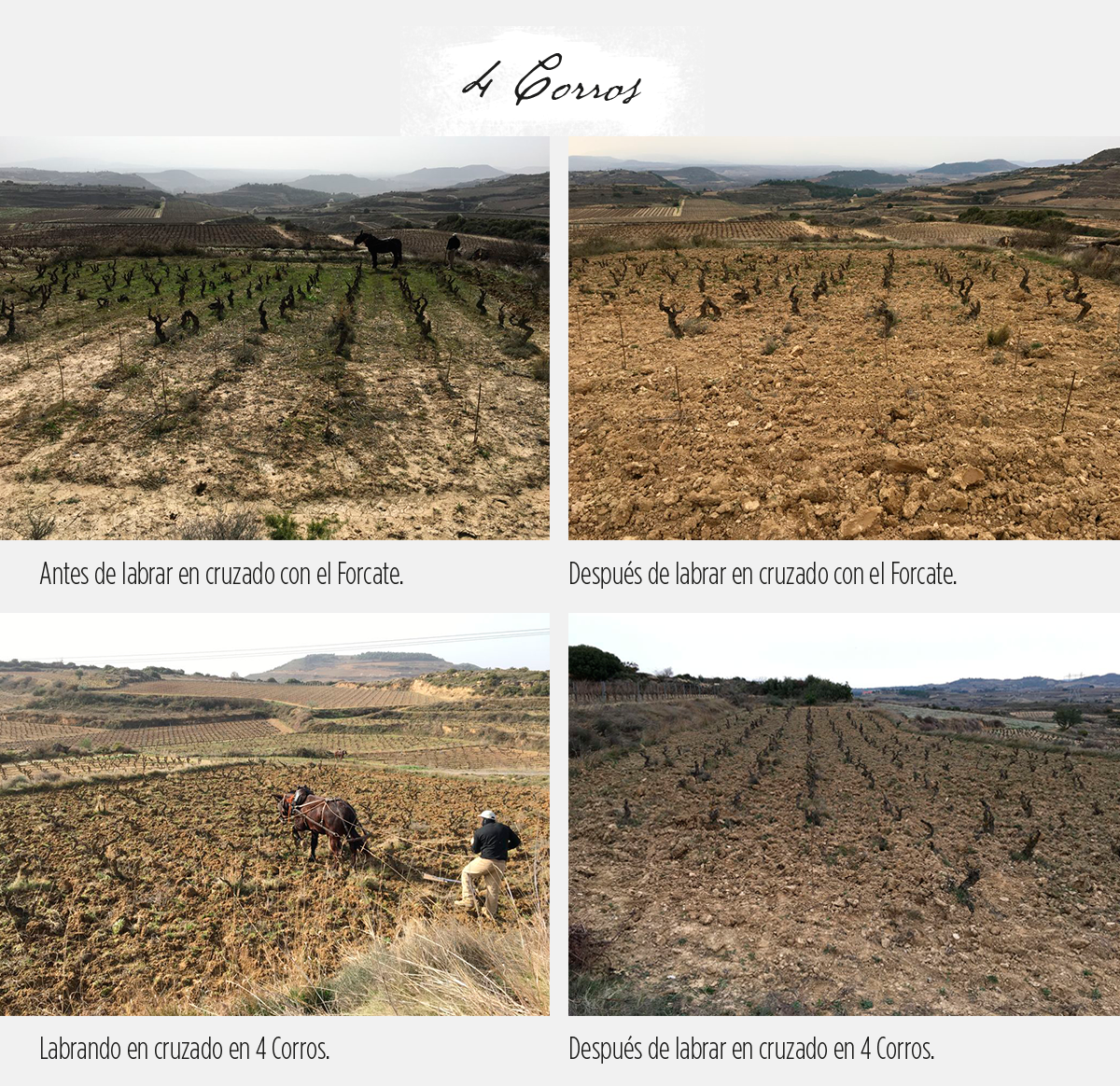
Again this year we have chosen to use draft animals in the old vineyards. These vineyards were planted in the 1920s, 1930s and 1935s in a square pattern, with a high density of vines and with narrow spacing between rows. It was the way vineyards were planted in those days, when ploughing was only conceived with such animals. Mechanization did not even exist as a concept. Such a planting pattern allows for the criss-crossing of the plough passes, top to bottom and bottom to top, side to side and back, and last diagonally. This is very effective to eliminate, without chemical herbicides, the weeds around the trunk of the vine, to ensure the respiration of the soil and to reduce the risk of erosion, since the furrows not only go up and down the slope, but also perpendicular to it and also diagonally. The water does not find paths by which to run wild, dragging the earth in its path. It is thus the most respectful way with the environment to avoid weeds in the vineyard, at the same time as ensuring the conservation of the surface layer of the soil where the microorganisms that contribute to preserving it live. It is this layer of about thirty centimetres thick that houses the living microorganisms that represent no less than 80% of the living biomass of the planet, and it is they that contribute to the greatest extent to the quality and personality of the result of the strains that welcome.
Working with animals in the vineyard has, in addition to all that has been said, the great advantage that the soil is not compacted as heavy machinery does. This allows for further root development and ultimately healthier vines and better quality grapes.
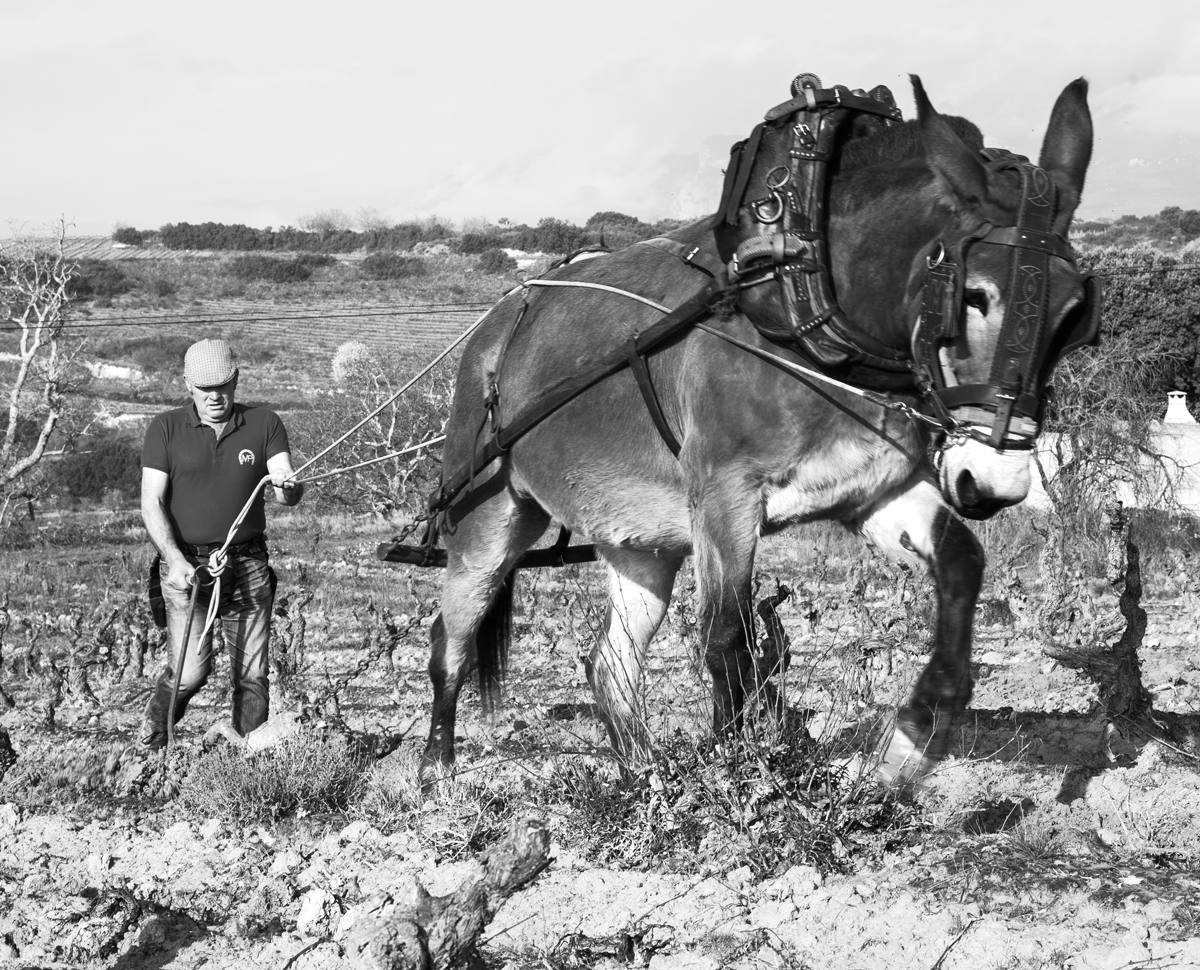
Working with draft animals is an art. Luckily we still have some people in Spain and specifically in the land of Rioja who keep it as a profession. They preserve a culture in the process of extinction. There are different types of ploughs in different shapes and different materials, some made entirely of wood, others combine it with steel and others are made of pure steel or wrought iron. The diversity allows to attend to different types of soil depending on its texture, humidity and structure, its different types of cultivation and the different tasks that proceed depending on the time of year or crop. There are also different ways of fixing the bridle, of attaching the plough to the animal, types of drawbars, pulling heights…, many variables from which the most subtle differences will be felt. As you can imagine, when working with one horsepower, the smallest setting can determine the most significant differences. Quite an art we have already said.
The work with manual plough allows to feel the earth; you are in direct contact with it, which means perceiving the different types of soil and working them in the most delicate or rigorous way that helps to maintain and improve its structure. Mechanization inevitably implies the loss of this intimate connection with the soil; Today most tractors and mechanical ploughs have enough power and steel to destroy the soil structure without the operator being aware of it.
Other years we have worked with horses and mares. This year it has been with a mule. There is a long tradition of working in agriculture in Spain with mules; arguably the preferred draft animal. The mule is a sterile hybrid, the result of a cross between a donkey and a horse. It has generally been a preferred option over the donkey, as it is larger and stronger, allowing it to pull a plough or cart with less effort and at a better pace. The mule is said to be much more resistant and tenacious than a horse – more stubborn than a mule is a common phrase – being able to work for long periods without rest pulling the plough through uneven terrain, feeding on what the farmer has available. They are also said to be more docile than a horse and less nervous, good traits when working between otherwise narrow crops.




Leave a Reply
Want to join the discussion?Feel free to contribute!